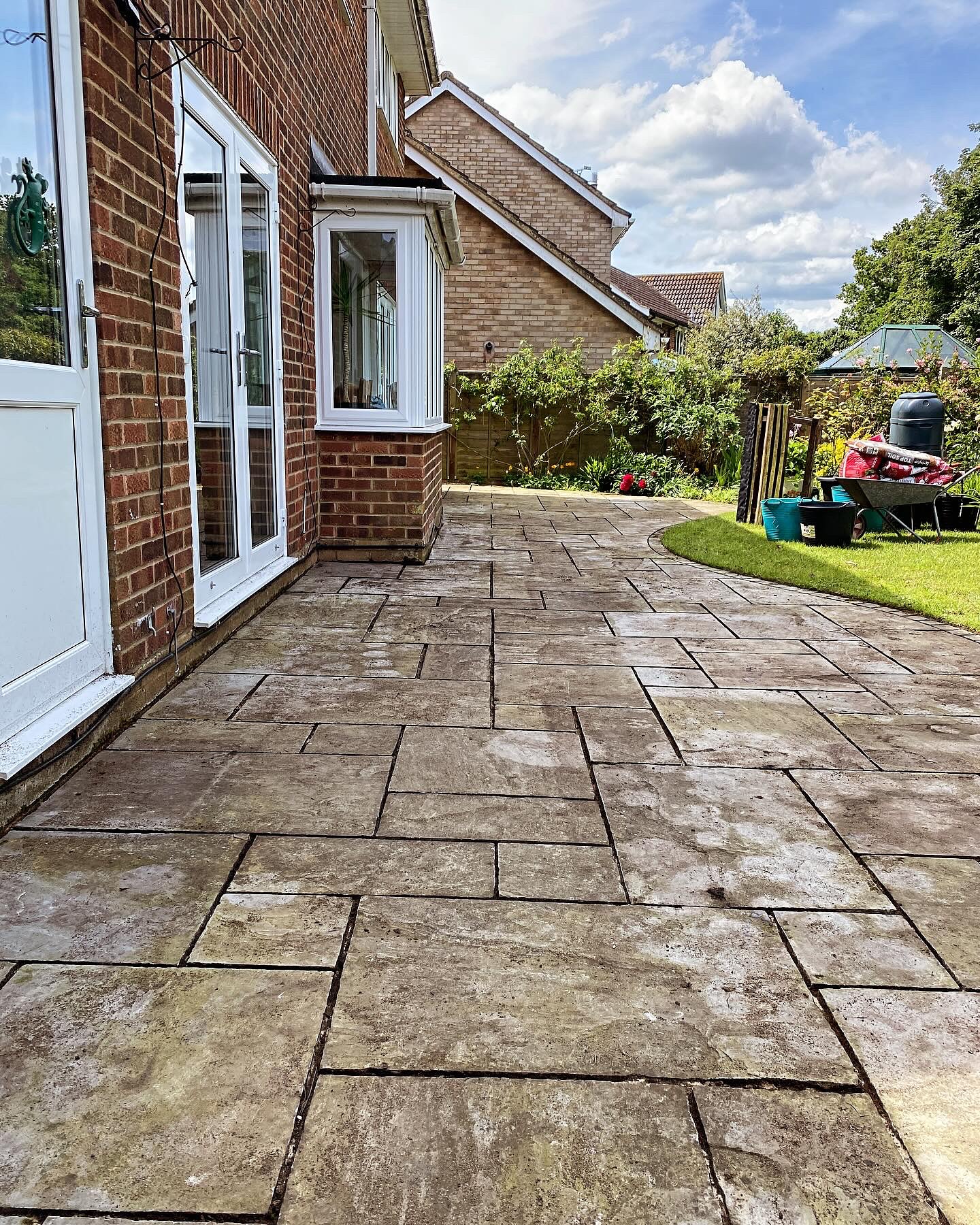
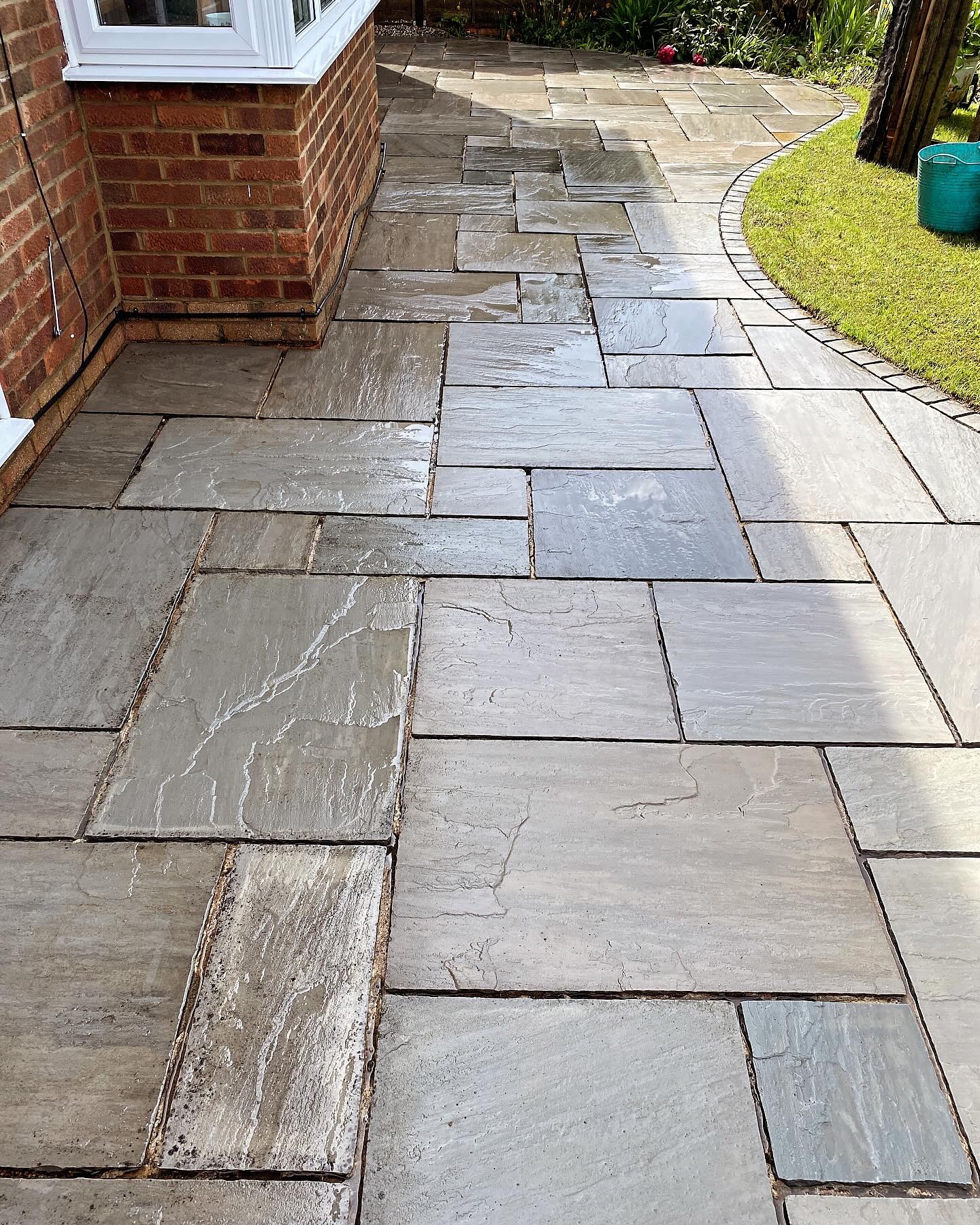
Preparing Your Driveway and Patio for Winter

In short: before the first hard frosts, clear leaves and moss, give the surface a proper clean, top up the jointing sand in block paving, fix any loose or sunken areas, and make sure drains and channels run freely. Water that gets into joints and cracks and then freezes is what does the damage over winter — so the aim is to keep water moving off and away.
Driveways and patios take more punishment between November and March than in the rest of the year put together. A couple of hours’ attention in autumn makes the surface safer underfoot, protects it against frost damage, and means it comes out of winter looking good rather than green. Here’s the checklist we’d work through on any driveway or patio in Chelmsford, Brentwood or the surrounding area this month.
1. Clear Leaves, Moss and Debris
Wet leaves hold moisture against the surface, stain paving and turn slippery very quickly. Sweep them up regularly rather than leaving them to rot down, and clear moss and weeds out of the joints before they have a chance to hold water through the winter.
2. Give the Surface a Proper Clean
A thorough clean lifts the algae and grime that make paving slippery in wet weather. If you’re pressure washing, use a fan nozzle, keep the lance moving and avoid blasting directly into the joints — and use a gentler setting on resin and natural stone. Pick a mild, dry day so the surface has time to dry out afterwards.
3. Top Up the Jointing Sand
On block paving, cleaning and a year of weather both wash kiln-dried sand out of the joints. That sand is what locks the blocks together, so once the surface is fully dry, brush fresh kiln-dried sand in until the joints are full. Low or empty joints let water in underneath — exactly what you don’t want going into a freeze.
4. Fix Loose, Sunken or Rocking Areas Now
A rocking slab, a loose block or a dip that holds a puddle will only get worse once water starts freezing in and around it. Lifting and re-bedding a small area in autumn is a quick job; leaving it until spring usually means a bigger repair. It also removes trip hazards before the dark evenings arrive.
5. Check Drains, Channels and Gullies
Clear leaves and silt out of channel drains and gullies, then check that water actually runs away after a downpour. Standing water becomes sheet ice overnight, and water that sits on a surface all winter will find its way into it.
6. Think About Sealing — but Watch the Weather
Sealing block paving or natural stone helps it resist water, staining and algae, and helps hold jointing sand in place. Sealant needs a completely dry surface and a spell of mild, dry weather to cure properly, so the autumn window is short. If the weather has already turned, it’s better to clean and re-sand now and seal in spring than to seal in poor conditions.
7. De-Ice with Care
When snow and ice do arrive, use a plastic shovel or stiff brush rather than a metal-edged one, which can chip and scratch paving. Use rock salt sparingly — repeated heavy salting can mark natural stone and concrete paving and isn’t kind to nearby lawns and borders — and rinse away the residue once the thaw comes.
Why Winter Is So Hard on Paving
The culprit is the freeze–thaw cycle. Water works its way into joints, hairline cracks and low spots; when it freezes it expands, forcing those gaps a little wider; then it thaws and lets more water in for the next cold night. A surface that goes into winter clean, tight-jointed and draining well gives that cycle very little to work with.
Frequently Asked Questions
Is it too late to seal my driveway or patio in autumn?
It depends on the weather rather than the calendar. Sealing needs a dry surface and mild, dry conditions while it cures. In a settled spell it can still be done; once it’s consistently cold or damp, it’s best left until spring.
Can I pressure wash my driveway in winter?
Yes, on a mild, dry day. Avoid cleaning when frost is forecast, because water left sitting in the joints can freeze before it has a chance to dry out.
Does salt damage block paving?
Occasional, light use on concrete block paving is generally fine. Heavy, repeated salting can leave white marks and wear the surface over time, and natural stone needs more care still — so use as little as you need and rinse it off afterwards.
How often should block paving be re-sanded?
After any deep clean, and otherwise whenever the joints look low — for most driveways that’s every few years.
If your driveway or patio needs more than maintenance — loose blocks, sunken areas or failed pointing — it is worth having it repaired before the frosts arrive.
Would you rather leave it to us? Take a look at our garden and driveway maintenance service, or visit our sister site Block Paving Maintenance for professional driveway and patio cleaning and sealing across Chelmsford, Brentwood and the A12 corridor.