Stone Driveways Built on Driveway Grids in Essex
In short: every stone driveway we build is laid on driveway grids over a properly prepared base. The grids hold the stone in place, so the driveway stays firm and level, doesn’t rut under car tyres, and lets rainwater drain straight through.
BPM Landscapes are your go to company for stone driveways created in various designs, but always using driveway grids for a driveway that will never sink and will last!
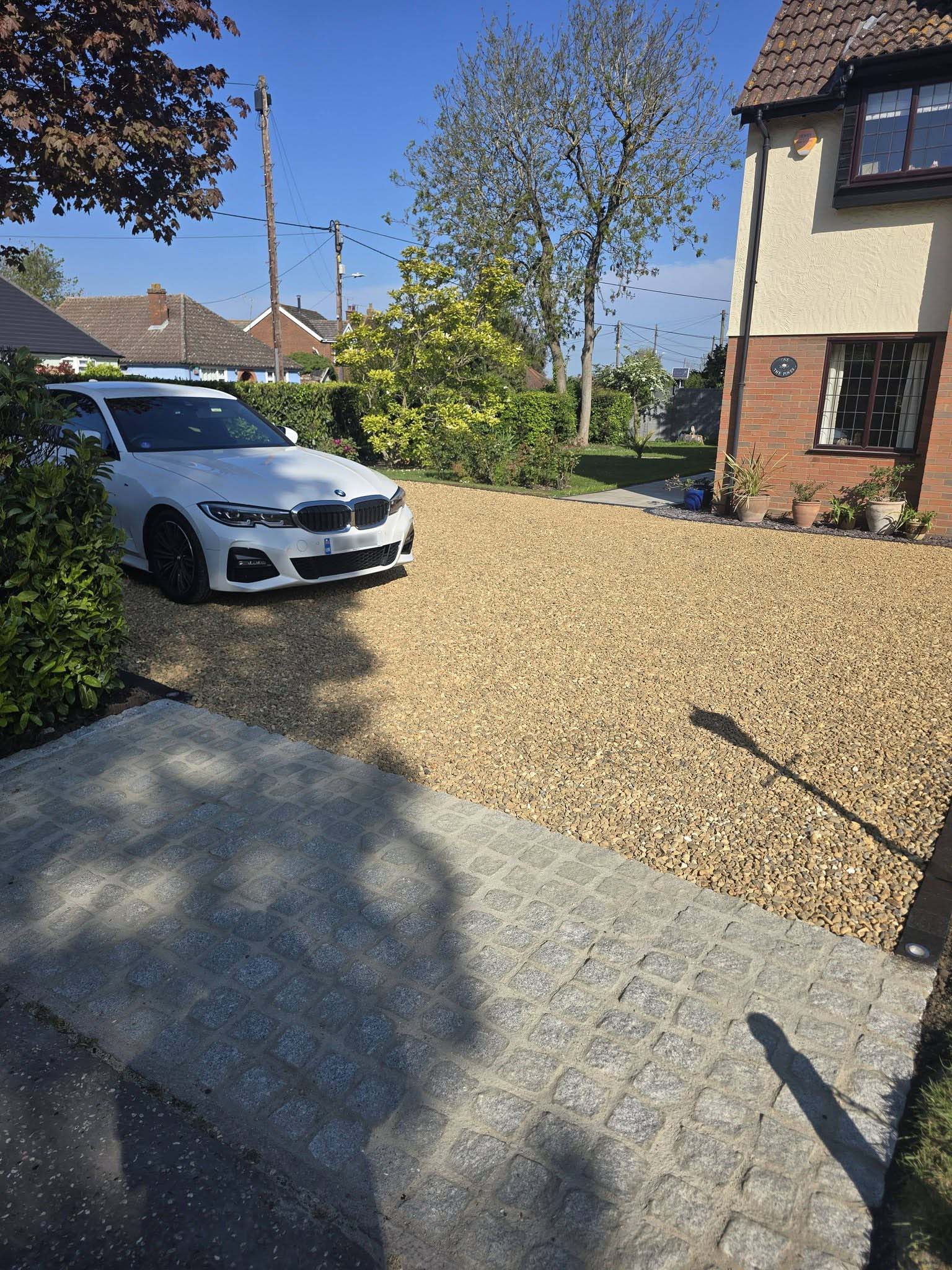
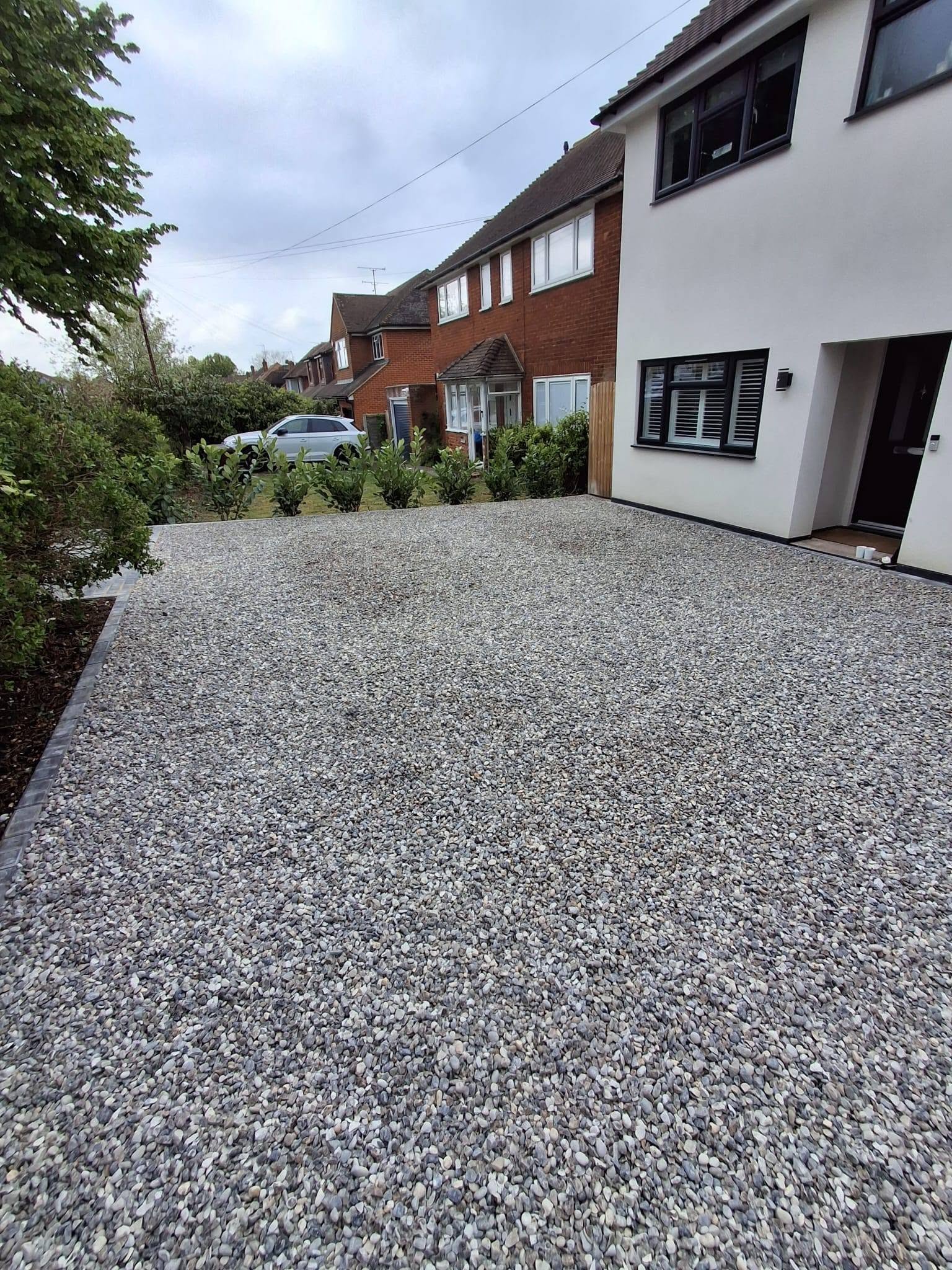
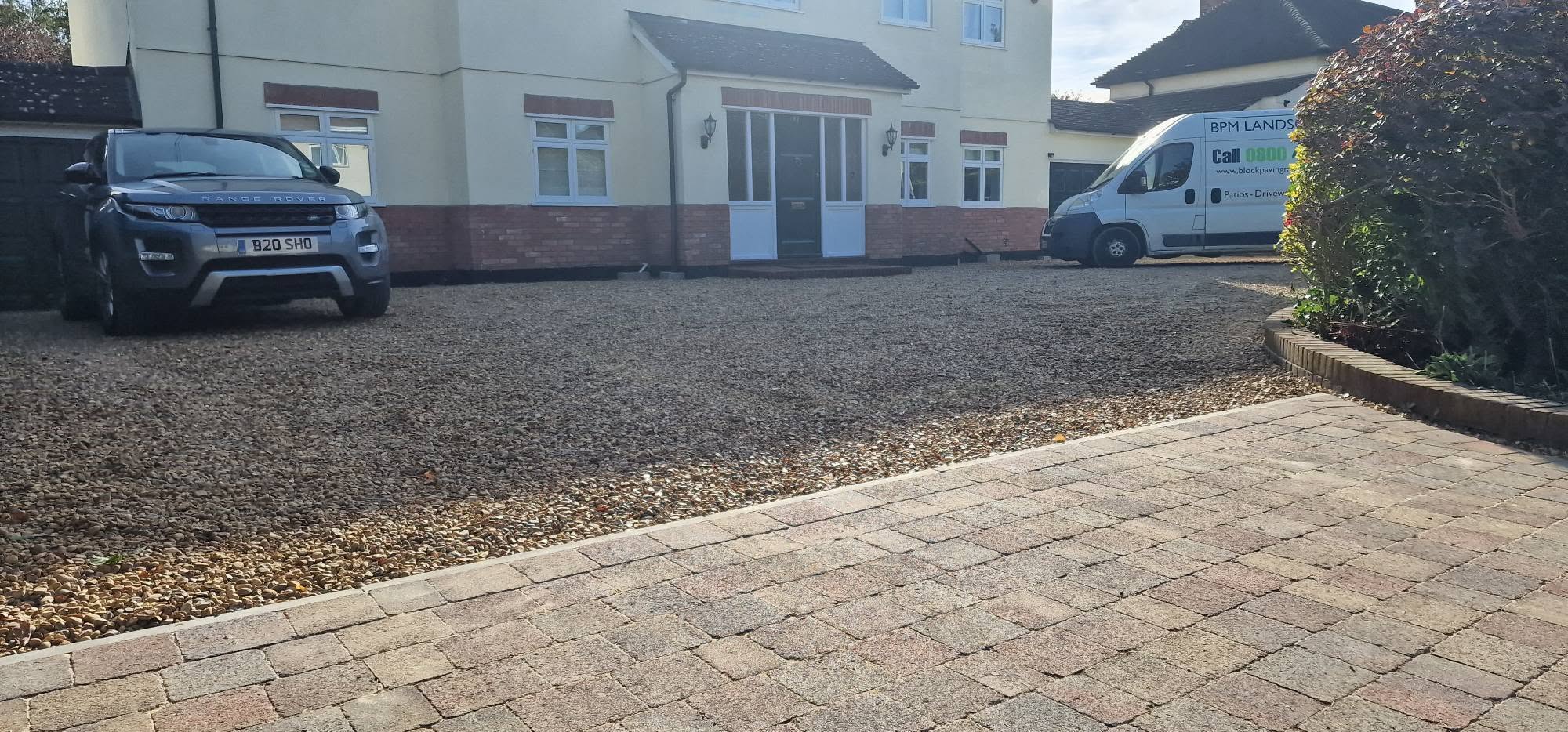
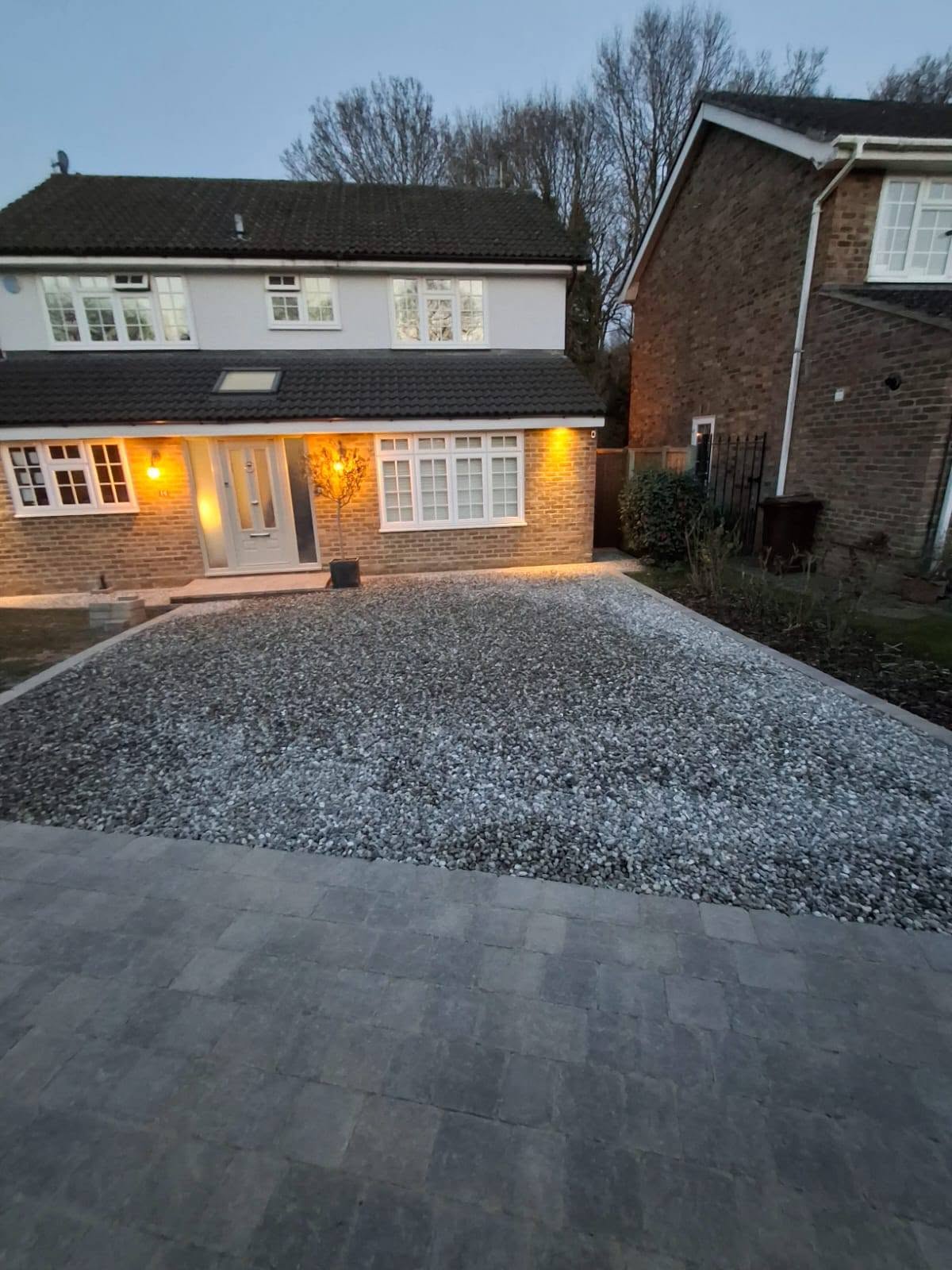
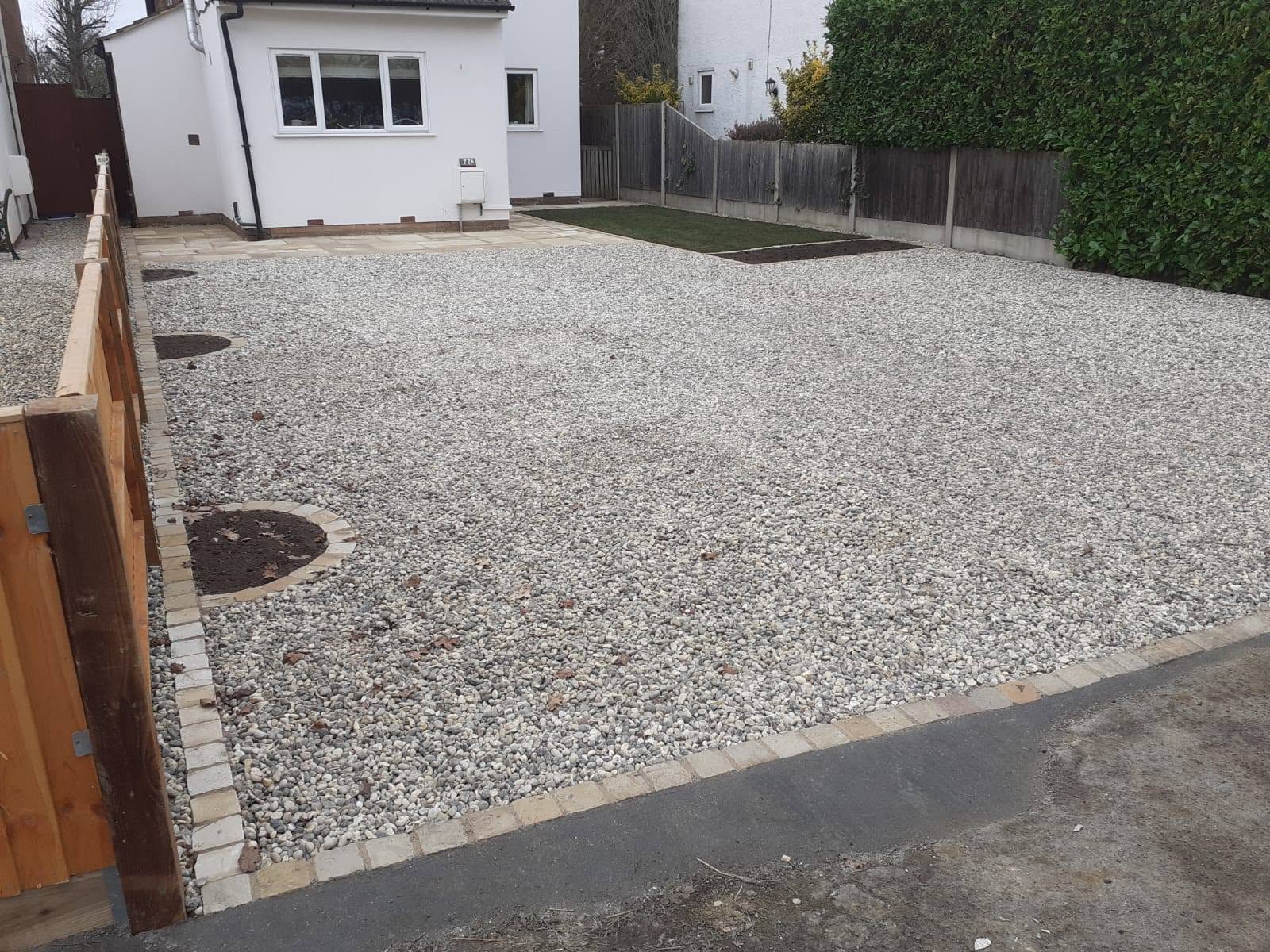
Stone driveways are one of the most popular ways to give a home a smart, welcoming frontage without the cost of a fully paved drive. The photos below show a selection of our recent stone driveways, from warm golden gravel to crisp silver-grey chippings, many finished with block paving borders. Each one looks different, but they are all built the same way underneath.
Our Stone Driveways at a Glance
| Surface | Decorative driveway stone (gravel or chippings) |
| Underneath | Driveway grids on a dug-out, compacted sub-base |
| Stone shown | Golden gravel and silver-grey chippings |
| Edging | Block paving borders and aprons, or other edging to suit |
| Drainage | Permeable – rainwater drains through the stone |
| Area | Chelmsford, Brentwood and across Essex |
What Are Driveway Grids?
Driveway grids are strong, interlocking panels made up of a honeycomb of small cells. We lay them over a dug-out and compacted sub-base, then fill the cells and top them with your chosen stone. Each cell holds its stones in place, and the panels spread the weight of a car across a much wider area.
That is the difference between a stone driveway that stays looking good and one that doesn’t. Loose stone tipped straight onto the ground gets pushed aside by tyres, forms ruts and dips, and slowly sinks into the soil beneath. With grids underneath, the stone stays where it was laid and the surface stays level.
Why We Always Use Driveway Grids
- A firm, level surface – no ruts or dips where the car parks and turns.
- Stone that stays put – far less gravel kicked onto the pavement, lawn or into the house.
- Easier to walk on – a firmer surface for feet, pushchairs and wheelie bins.
- Less topping up – because the stone isn’t spreading or sinking, you need less of it over the years.
- Natural drainage – rainwater soaks through the stone and grids rather than running off into the road.
Stone Driveways in Various Designs
The stone you choose sets the look of the whole frontage. Golden gravel gives a warm, traditional finish that suits older and period-style homes, while silver-grey chippings look clean and modern alongside light render and dark window frames, as you can see in the photos below.
Edging finishes a stone driveway off and keeps the stone contained. Many of our customers choose a block paving border or a block-paved apron where the driveway meets the pavement. It frames the stone, gives a crisp straight line, and provides a solid strip at the entrance where tyres turn most. We can also add paths, kerbs or a paved parking pad to suit your home.
For another example, see our golden gravel driveway with granite setts and lighting.
Is a Stone Driveway Right for You?
A stone driveway is a good choice if you want an attractive, natural-looking drive that drains well and costs less than a fully block-paved one. If you’d prefer a completely solid surface, take a look at our driveways page or our guide to block paving vs resin driveways. We’re happy to talk through the options at your free site survey.
Stone Driveway Questions
Why do some gravel driveways sink or rut?
Usually because the stone has been laid straight onto the ground, or on a thin base, without anything to hold it in place. Car tyres push the loose stone aside and down into the soil. Laying the stone on driveway grids over a properly compacted sub-base stops this from happening.
Which stone is best for a driveway?
It mostly comes down to the look you want. Golden gravel suits traditional homes and silver-grey chippings suit modern ones. We’ll show you options at the survey and recommend a stone size that works well with grids and is comfortable to walk on.
Does a stone driveway need much maintenance?
Very little. An occasional rake to keep the surface even, and clearing leaves now and then, is usually all it needs. Because the grids stop the stone spreading, you’ll top it up far less often than a loose gravel drive.
Do I need planning permission for a stone driveway?
In England, a new front driveway generally doesn’t need planning permission if it uses a permeable surface that lets rainwater drain through, which a stone driveway on grids does. Rules can differ for listed buildings and conservation areas, and a new dropped kerb needs the council’s approval, so it’s always worth checking with your local council first.
Thinking about a new stone driveway in Chelmsford, Brentwood or elsewhere in Essex? With 30 years’ experience laying driveways and patios, we’ll help you choose the stone, edging and layout to suit your home. Get in touch for a free, no-obligation quote.
Some of Our Recent Stone Driveways